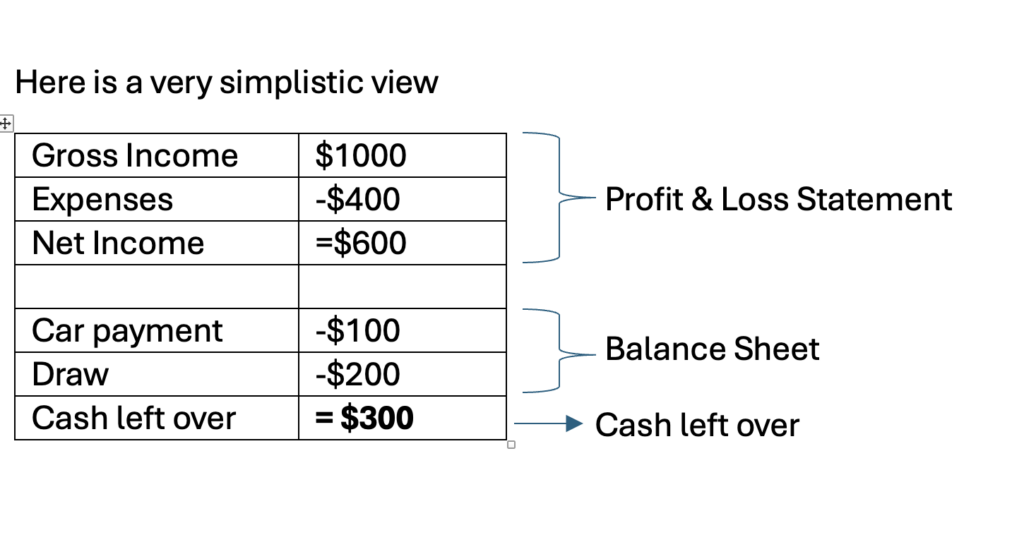
The most skipped over statement is skipped for good reason, it is not understood. The Profit and Loss Statement, aka P&L or Income Statement, shows your income and expenses. When you look at this statement, you see your gross income, all the money you brought in, and then it lists the expenses that are subtracted from the gross income to give you the net income, the money that is left over. But is it? What the Profit and Loss Statement does not show are those transactions on the Balance Sheet that affect the money that is left over. Loan payments, and draws are the two most common Balance Sheet transactions that do not show up on the P&L and affect how much cash is left. This is where the Statement of Cash Flow comes in. It marries the P&L with the Balance Sheet. The top of the Statement of Cash Flow starts with the net income from the P&L. It then subtracts, or adds, transactions that affect how much money is leftover. There are three sections to this report, operating, financing, and investing, activities that will reduce, or increase, how much money is leftover. The bottom of the Statement of Cash Flow will show you how much cash you started with at the beginning of the period, usually the beginning of the month, and how much cash you ended up with at the end of the period. In my experience, the more loans you have, the more misleading the net income on the P&L is, the more important looking at the Statement of Cash Flow is.